Cure Time
Polyaspartic cures dramatically faster — walk-ready in about 24 hours and vehicle-ready in 48–72, compared to epoxy's typical 3–5 day full cure. If your household can't be without a functioning garage for a week, that alone often settles the decision.
UV Stability
This is the big one for North Texas specifically. Standard epoxy is not UV-stable — it will yellow and chalk over time when exposed to direct sunlight, which matters if your garage gets sun through the door opening or has windows. Polyaspartic is UV-stable and holds its color and gloss under Texas sun far longer.
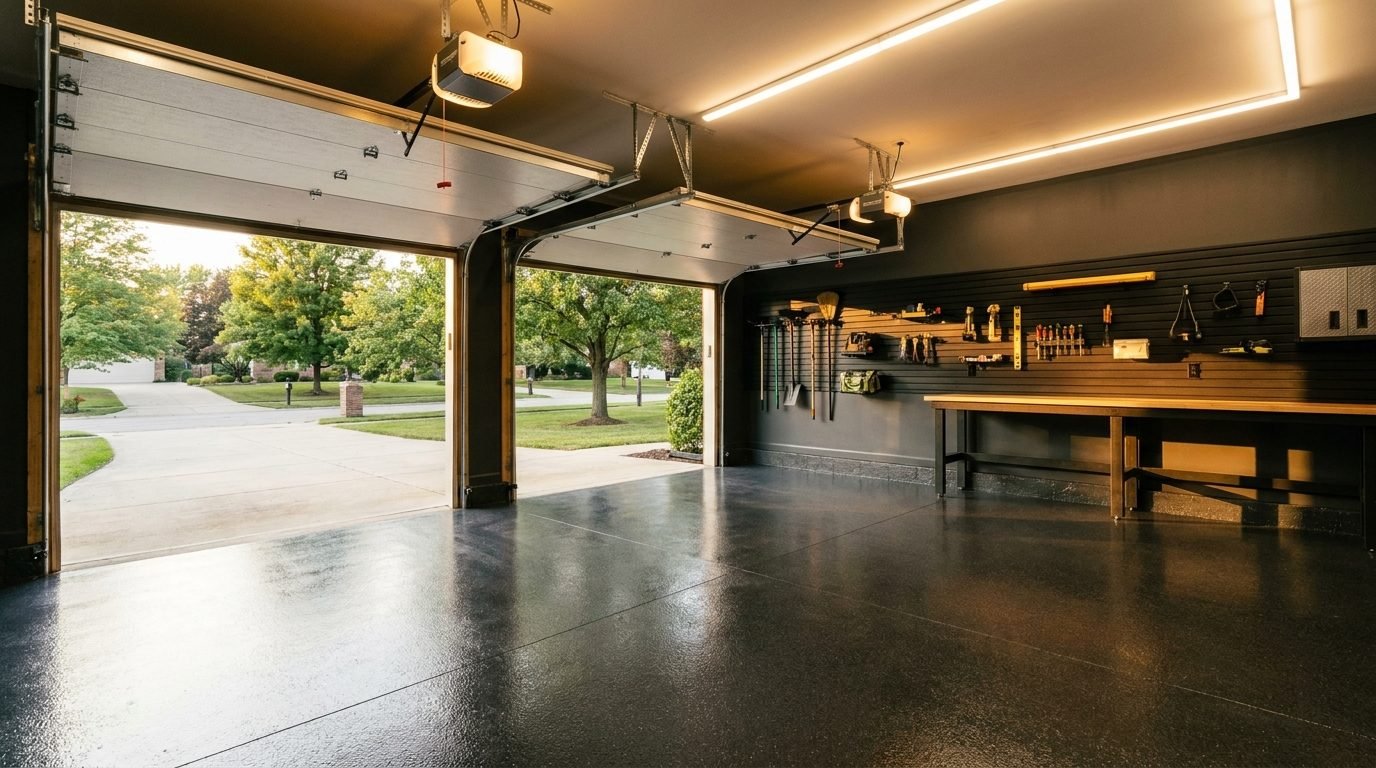
Heat and Hot-Tire Resistance
Polyaspartic's chemistry resists hot-tire pickup — the softening and lifting that can happen when a hot tire sits on a coating — better than standard epoxy, which matters when pavement-level garage temperatures regularly exceed 100°F for months.
Flexibility Through Slab Movement
North Texas's expansive clay soil causes more seasonal slab movement than many other regions. Polyaspartic has more flex than rigid epoxy, so it's less likely to crack in sympathy with minor movement in the concrete underneath.
Cost
Epoxy systems are typically somewhat less expensive upfront. Given the durability and climate-fit advantages above, most of our North Texas clients choose polyaspartic anyway — but epoxy remains a solid, budget-friendly option for lower-traffic spaces or tighter budgets.
Our Recommendation
For the average North Texas residential garage, we recommend polyaspartic. It's not a marketing preference — it's a genuine fit for this specific climate. We'll always give you an honest recommendation based on your slab, your budget, and how you use the space.
Ready for Your Free Estimate?
On-site assessment, same-day quote, and a lifetime warranty on every residential installation.
Get Free Estimate →